


Food for Thought: Tomatoes!
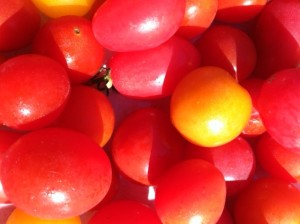
A tomato is the edible, often red fruit from the plant Solanum lycopersicum, commonly known as a tomato plant. Both the species and its use as a food originated in Mexico, and spread around the world following the Spanish colonization of the Americas. The tomato is botanically a fruit, but it is considered a vegetable for culinary purposes. The tomato belongs to the nightshade family. The plants typically grow to 1–3 meters (3–10 ft) in height and have a weak stem that often sprawls over the ground and vines over other plants. It is a perennial in its native habitat, although often grown outdoors in temperate climates as an annual. An average common tomato weighs 102–105 grams.
The tomato appears to have been first cultivated in Mexico, most likely in Aztec civilizations and probably in the form of small yellow fruits. The word “tomato” may actually originate from the Nahautl (Aztecan) word “tomatl ” meaning “the swelling fruit.” It wasn’t until the 1500’s that Spanish explorers and colonizers brought tomato seeds from Mexico back to Spain and introduced this food to European populations.Although the use of tomatoes spread throughout Europe (including Italy) over the course of the 1500’s, tomatoes did not enjoy full popularity then and were seen by many people as unfit to eat. Part of this “food inappropriateness” was associated with the status of the tomato plant as a nightshade plant and its potential poisonousness in this regard. (It’s true, of course, that tomatoes belong to the Solanaceae or nightshade family of plants, along with potatoes, sweet and hot peppers, eggplant, tomatillos, tamarios, pepinos, pimentos, paprika, and cayenne.
Today tomatoes are enjoyed worldwide—to the tune of about 130 million tons per year. The largest tomato-producing country is China (with approximately 34 million tons of production), followed by the United States, Turkey, India, and Italy.
Varieties of Tomatoes
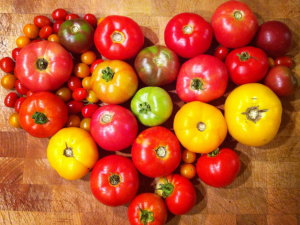
There are around 7500 tomato varieties grown for various purposes. Heirloom tomatoes are becoming increasingly popular, particularly among home gardeners and organic producers, since they tend to produce more interesting and flavorful crops at the cost of disease resistance and productivity.
Hybrid plants remain common, since they tend to be heavier producers, and sometimes combine unusual characteristics of heirloom tomatoes with the ruggedness of conventional commercial tomatoes.
Tomato varieties are roughly divided into several categories, based mostly on shape and size.
- Globe tomatoes are the usual tomatoes of commerce, used for a wide variety of processing and fresh eating.
- Beefsteak tomatoes are large tomatoes often used for sandwiches and similar applications. Their kidney-bean shape, thinner skin, and shorter shelf life makes commercial use impractical.
- Oxheart tomatoes can range in size up to beefsteaks, and are shaped like large strawberries.
- Plum tomatoes, or paste tomatoes (including pear tomatoes), are bred with a higher solids content for use in tomato sauce and paste, and are usually oblong.
- Pear tomatoes are obviously pear-shaped used for a richer gourmet paste.
- Cherry tomatoes are small and round, often sweet tomatoes generally eaten whole in salads.
- Grape tomatoes, a more recent introduction, are smaller and oblong, a variation on plum tomatoes, and used in salads.
- Campari tomatoes are also sweet and noted for their juiciness, low acidity, and lack of mealiness. They are bigger than cherry tomatoes, but are smaller than plum tomatoes.
Selection & storage
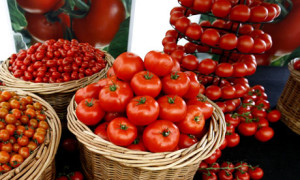
Choose tomatoes that have rich colors. Deep reds are a great choice, but so are vibrant oranges/tangerines, brilliant yellows, and rich purples. Tomatoes of all colors provide outstanding nutrient benefits. Tomatoes should be well shaped and smooth skinned with no wrinkles, cracks, bruises, or soft spots. They should not have a puffy appearance since that characteristic is often associated with inferior flavor and may also result in excess waste during preparation. Ripe tomatoes will yield to slight pressure and will have a noticeably sweet fragrance.
Tomatoes keep best unwashed at room temperature and out of direct sunlight. It is not recommended to refrigerate as this can harm the flavor. Tomatoes that are not yet ripe can be kept in a paper bag till ripening. Storing stem down can prolong shelf life. They will keep for up to a week, depending upon how ripe they are when purchased.
Nutritive Value
1 cup of raw tomatoes contain 32 calories, 1.5gm protein, 0.25gm fat, 6 gm carbohydrate and 2 gm fiber. It also provides 40 percent of the recommended daily allowance of vitamin C, 20 percent of the RDA of vitamin A.
Tomatoes are the most concentrated food sources of lycopene. Lycopene is an antioxidant compound that gives tomatoes their color. Studies that looked at lycopene levels in the blood found that levels were higher after people ate cooked tomatoes than after they ate raw tomatoes or drank tomato juice. This suggests that lycopene in cooked tomato products such as tomato sauce or paste may be more readily absorbed by the body than lycopene in raw tomatoes. Eating lycopene-rich vegetables and fruits together with a small amount of oil or fat (for example, salad oil or cheese on pizza) increases the amount of lycopene absorbed by the intestines. Tomatoes are also an excellent source of free radical-scavenging vitamin C and vitamin A as well as bone-healthy vitamin K.
Health Benefits
Tomatoes are the biggest source of dietary lycopene; a powerful antioxidant that protect against certain kinds of cancer and neurodegenerative disease. Tomatoes also contain other protective mechanisms, such as antithrombotic and anti-inflammatory functions. Research has additionally found a relationship between eating tomatoes and a lower risk of health conditions, including cardiovascular disease, osteoporosis, ultraviolet light-induced skin damage, and cognitive dysfunction.
Preparation & uses
Tomatoes have been used for generations by cuisines from around the world. They may be consumed raw in salads, dips and sauces or cooked with other ingredients into a soup or main dish. Its sweet/acidic flavor renders a unique taste to many meal preparations.
Stay tuned for some easy and delicious recipes using tomatoes..
-Aparna Ramadurai
08/13/13