


Food for Thought- Avocado!
Introduction
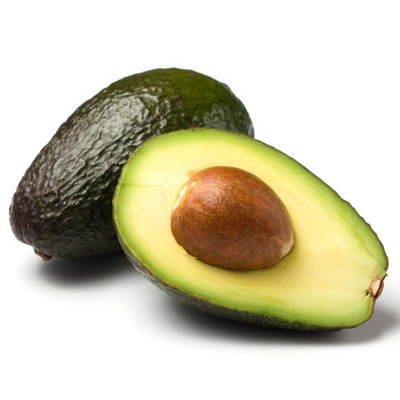
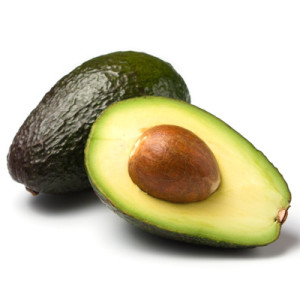
The avocado (Persea americana) is a tree native to Mexico and Central America, classified in the flowering plant family Lauraceae along with cinnamon, camphor and bay laurel. Avocado or alligator pear also refers to the fruit, botanically a large berry that contains a single seed.
Avocados are commercially valuable and are cultivated in tropical and Mediterranean climates throughout the world. They have a green-skinned, fleshy body that may be pear-shaped, egg-shaped, or spherical. Commercially, they ripen after harvesting. Trees are partially self-pollinating and often are propagated through grafting to maintain a predictable quality and quantity of the fruit.
Cultivation:
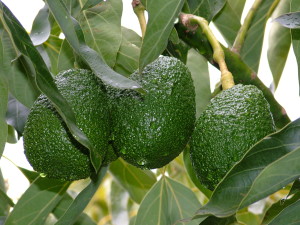
The avocado was introduced from Mexico to California in the 19th century, and has become a successful cash crop. About 59,000 acres (240 km2) – some 95% of United States avocado production – is located in Southern California, with 60% in San Diego County. Fallbrook, California claims the title of “Avocado Capital of the World”
The avocado is a climactic fruit (the banana is another), which means it matures on the tree, but ripens off the tree. Avocados used in commerce are picked hard and green and kept in coolers at 3.3 to 5.6 °C (37.9 to 42.1 °F) until they reach their final destination. Avocados must be mature to ripen properly. Avocados that fall off the tree ripen on the ground. Generally, the fruit is picked once it reaches maturity; Mexican growers pick Hass-variety avocados when they have more than 23% dry matter, and other producing countries have similar standards. Once picked, avocados ripen in one to two weeks (depending on the cultivar) at room temperature (faster if stored with other fruits such as apples or bananas, because of the influence of ethylene gas).
Avocado Varieties
Hass: The Hass variety has become the year-round avocado available in stores. It is distinctive for its skin that turns from green to purplish-black when ripe, the Hass is now the leading variety of California Avocado and has an excellent shelf life. The Hass has been highly marketed and is grown throughout the globe. It is very popular for it’s nutty flavor and good handling characteristics.
Description: Oval-shaped fruit, small to medium seed, easy peeling. Size 5 to 12 ounces, Appears pebbly, thick but pliable skin and has a pale green flesh with creamy texture. Skin darkens as it ripens. The fruit yields to gentle pressure when ripe
Fuerte: The Fuerte variety is an established avocado favorite. It is a California winter variety that has an excellent flavor. The name Fuerte, which means strong in spanish, was given after this variety was one of the sole varieties to survive freezing temperatures. Harvested late fall through spring, the Fuerte is the original high quality California Avocado. The Fuerte is a smooth skin variety and is on the verge of being classified in the “avocado other” category. There is no so few trees planted that it is no longer marketed to the consumer via retail stores.
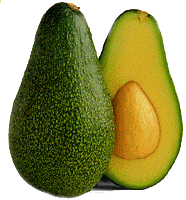
Description: Pear shapes, medium seed, peels easily. Medium to large fruit ranging from 5-14 oz. Smooth thin green skin with creamy, pale green flesh.
Reed: The Reed avocado is a summertime variety that extends into late fall. It is a large, round fruit that is known for it’s softball shape. During their prime, this variety tastes excellent. It is rarely available and only found in some Southern California retail stores. The Reed is excellent for slicing and eating. One of the more favorite uses are as a complete meal substitute. The size of this fruit and the round shape make it conducive for a make shift bowl. Remove the pit and fill the center with your favorite ingredients and enjoy.
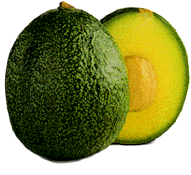
Description: Round fruit, medium seed. Medium to large size ranging from 8-18oz. Has thick green skin with slight pebbling and creamy flesh.
Nutritive Value
One medium sized avocado contains 250kcal, 23gm fat (15gm of which is monounsaturated) 3gm protein, 13gm carbs and 10gm fiber.
Health Benefits
- Maintain a healthy heart : Avocado contains vitamin B6 and folic acid, which help regulate homocysteine levels. High level of homocysteine is associated with an increased risk of heart disease. Avocado also contains vitamin E, glutathione, and monounsaturated fat, which help in maintaining a healthy heart.
- Lower cholesterol levels: Avocados are rich in a compound called beta-sitosterol which has been shown to be effective in lowering blood cholesterol levels. According to a study, patients with mild hypercholesterolemia who included avocados in their diet for 7 days had 17 percent decrease in total blood cholesterol levels, a 22 percent decrease in both LDL (bad cholesterol) and triglyceride levels, and a 11 percent increase in HDL (good cholesterol) levels.
- Control blood pressure: Avocados are also a great source of potassium, which helps in controlling blood pressure levels.
- Anti-Inflammatory properties: Phytonutrient compound found in avocados, such as polyphenols and flavonoids have been found to have anti-inflammatory properties, thereby reducing the risk of inflammatory and degenerative disorders.
- Promote eye health: Avocado is an excellent source of carotenoid lutein, which known to help protect against age-related macular degeneration and cataracts.
- Regulate the blood sugar levels: The monounsaturated (good) fats in avocados can reverse insulin resistance which help to regulate blood sugar levels. Avocados also contain soluble fiber which keep a steady blood sugar levels.
- Prevent birth defects: Avocados are rich in folate, a B vitamin commonly known as folic acid. One cup of avocado provides about 23% of the recommended daily value of folate. The high amount of folate in avocado is essential in the prevention of birth defects, such as neural tube defect and spina bifida.
- Reduce strokes risk: The high levels of folate in avocados may also protect against stroke. A study has shown that individuals who ate a diet rich in folate had a lower risk of stroke than those who did not
- Protect against cancer: Many studies have shown that avocado can inhibit the growth of prostate cancer. The oleic acid in avocado is also effective in preventing breast cancer.
- Fight free radicals: Avocados contain glutathione, a powerful antioxidants that helps fight free radicals in the body.
- Anti-aging properties: Being rich in antioxidants, avocado is beneficial in preventing aging symptoms. The glutathione in avocado may boosts immune systems, slows aging process, and encourages a healthy nervous system.
- Cure bad breath: Avocados are one of the best natural mouth wash and bad breath remedies. It is cleanses intestine which is the real cause of coated tongue and bad breath.
- Increase nutrient absorption: Avocado intake is linked with an increased nutrient absorption. A study suggests that, when participants ate salad included avocados, they absorbed five times the amount of carotenoids (a group of nutrients that includes beta carotene and lycopene) than those who did not include avocados.
- Skin Care: The avocado oil is added in many cosmetics because of its ability to nourish the skin and make your skin glow. It also aids in treating psoriasis, a skin disease that causes skin redness and irritation.
- Weight gain: The avocado has 200 calories for 100 grams. Typically, fruits has approximately 60-80 calories for 100 grams. Due to the high amounts of calories, avocado is a best diet for people who want to gain weight. Avocado is a healthy source of calories, unlike many other calorie-dense foods that may contain excess saturated fats and sugar.
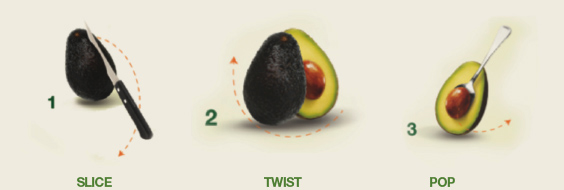
cut into the avocado straight down,
longitudinally (from top to bottom)
until you hit the pit.
it separates into two halves, one of which
will contain the pit.